
Chicago Reporting Help Desk
Need help with coverage? Contact the Workshop at cmw@newstips.org or call
1-312-369-6400 for assistance.
Sources: Academic
Terry Nichols Clark, professor of sociology, University of Chicago. Has written on city’s transformation. 773-702-8686. t-nclark@uchicago.edu
Michael Pagano, dean, College of Urban Planning and Public Affairs (CUPPA) , University of Illinois at Chicago. Expert, urban finances. 312-355-4681. mapagano@uic.edu
Saskia Sassen, Robert S. Lynd Professor of Sociology, Columbia University. Former professor, University of Chicago. Author, The Global City: New York, London, Tokyo. 212-854-0790. sjs2@columbia.edu
Sources: Regional
Mary Sue Barrett, president, Metropolitan Planning Council. Former top aide to Mayor Daley, broad knowledge of urban issues. 312-863-6001. msbarrett@metroplanning.org
Tom Garritano, communications director, Chicago Metropolitan Agency for Planning. Important planning agency. 312-386-8609. tgarritano@cmap.illinois.gov
Frank Beal, executive director, Metropolis Strategies. Active in regional planning, especially on transport issues. 312-332-2020. frank.m.beal@cm2020.org
William Testa, Vice president and director of regional research, Federal Reserve Bank of Chicago. Best Fed expert on Chicago economy. 312-322-5791. William.testa@chi.frb.org
Sources: Business
Rita Athas, president, World Business Chicago. WBC is lead organizer of summit, public-private agency for trade and investment. 312-533-4628. rathas@worldbusinesschicago.com
Lee Bey, ex-executive director, Chicago Central Area Committee. Specializes in Loop’s economy. 312-479-2671.lee@leebay.com
Brian Fabes, CEO, Civic Consulting Alliance. Leading advisor to city, expert on city’s economy.312-853-9168. bfabes@ccachicago.org
Tyrone Fahner, president, Commercial Club of Chicago. Leading business organization. 312-853-1200. cgadboys@civiccom.org
Jerry Roper, president and CEO, Chicagoland Chamber of Commerce. Leading business organization. 312-494-6710. jroper@chicagolandchamber.org
David Vitale, chairman, Urban Partnership Bank (formerly ShoreBank), ex-CEO, Chicago Board of Trade 312-283-4349. david@davidvitale.com
Doug Whitley, president and CEO, Illinois Chamber of Commerce. 312-983-7100. dwhitley@ilchamber.org
Robert Wislow, president, U.S. Equities Realty. Expert on urban real estate issues. 312-456-7000. bwislow@usequities.com
Sources: Philanthropy
Terry Mazany, president and CEO, Chicago Community Trust. City’s leading urban foundation. He was interim Chicago school superintendent. 312-616-8000 x159. tmazany@cct.org
Julia Stasch, vice president, MacArthur Foundation. Expert on urban issues. Former chief of staff to Mayor Daley. 312-726-8000. jstasch@macfound.org
Sources: Urban Experts
Paul O’Connor, urban strategist, Skidmore Owings & Merrill architects. Former president World Business Council. Deeply knowledgable on city’s economy. 312-360-4539. Paul.O’Connor@som.com
Aaron Renn, blogger, The Urbanophile. Leading blog on urban issues. arenn@urbanophile.com
Andrea L. Zopp heads the Chicago Urban League, founded 95 years ago and focused on a range of economic development issues. 773-451-3500. president@thechicagurbanleague.org. Roderick Hawkins, VP of external affairs. 773-451-3536. rhawkins@thechicagourbanleague.org
Sources: Workforce
William J. Leavy, executive director, Greater West Town Community Development Project. One of the city’s top community-based job training programs. 312-432-9595. wjleavy@gwtp.edu
Jorge Ramirez, president, Chicago Federation of Labor, a key convener of organized labor. To reach Jorge contact Nick Kaleba, communications director, Chicago Federation of Labor. 312-222-1000. nkaleb@chicagolabor.org
Dan Swinney, founder and executive director, Center for Labor and Community Research. Veteran workforce development and industrial sector observer. 773-278-5418 x13. dswinney@clcr.org

By Richard Longworth
At mid-century, Chicago was the “City of the Big Shoulders,” the mightiest industrial city of them all. Thirty years later, in the ‘80s, it was “Beirut by the Lake,” a troubled metropolis caught in economic decay and torn by racial politics. Along the way it’s been the “Second City” or the “City on the Make” or, as the first Mayor Daley had it, “The City That Works,” a name that stuck even at a time when it seemed the city stopped working.
Today, Chicago is a global city, anointed by rankings that invariably put it in the top ten of global cities worldwide, up there with Hong Kong and Singapore. Indeed our architects design whole cities in China and, in Dubai, the world’s tallest building. Our museums, theatres, symphony and universities are second to none. The Washington Post dubbed Chicago “the Milan of the Midwest,” Bernard-Henri Levy called it “this magical, beautiful city, perhaps the most beautiful in the United States,” and the Economist magazine devoted a special section to it called “A Success Story.”
Well, yes and no. If Chicago has come back from its Rust Belt torpor of the 1980s, its rebirth as the mid-continental metropolis is still a work in progress. The glitter and power are real, but so are the challenges – economic, fiscal, demographic, educational.
Meeting the 21st century
What can be said is that Chicago today is a laboratory of urban change, the very model of a city making the hard transition from industrial behemoth to global city – that is, from the 20th to the 21st century.
It may be America’s most interesting city, but not for the usual clichés: Al Capone’s era ended 80 years ago and even Michael Jordan has been gone for fourteen years: the Bulls are still healthy, the Mob less so. Rather, Chicago today is a thrusting but struggling city, part beautiful and part bleak, created for one era and coping with another, an experiment in civic transformation, dominating the American heartland even as it loses people and jobs.
Chicago is what it is because it’s where it is. Incorporated barely 180 years ago, it began life as a trading post at the foot of Lake Michigan, where the early trails from the east coast met the rivers flowing into the Mississippi and the American interior. The first railroad came through in 1848 and cemented Chicago’s supremacy among western cities. Coal trundled up from the Midwest and iron ore floated down the Great Lakes from the north, to be fused into the steel industry. Midwestern cattle created and fed the Chicago Stockyards and Midwestern crops created the mighty Chicago markets. Across the Midwest, towns and cities grew to feed the city’s thirst for coal and crops and livestock and wood. Literally, Chicago and the Midwest created each other.
The Great Fire of 1871 destroyed much of the center of Chicago. Undaunted, the city bounced back with more industry, more building, more jobs, more stores, higher buildings (it invented the skyscraper). Overcoming East Coast skeptics, it hosted a successful Columbian Exposition World’s Fair in 1893. Through the first half of the 20th century, it became the heart of American industry – and of labor strife. From the Haymarket riots in 1886 to the Pullman strike in 1894 to the Republic Steel massacre of 1937, capital and labor battled and burgeoned in equal measure.

Magnet for immigrants & migrants
Chicago’s growing economy became a magnet for waves of immigrants from around the world, working hard jobs, building neighborhoods and churches and community institutions. The trains that crisscrossed Chicago for a half century now framed the Great Migration of African Americans from the agricultural South to the city’s stockyards and factories: They built a thriving Black Metropolis, rich in culture, commerce and politics – which decades later would give America its first black president.
In the postwar years, Chicago took this industrial civilization to a level of economic decency unmatched before or since, a sort of a working class middle class. Workers on blast furnaces and assembly lines, unschooled and semi-skilled, owned their own homes, a car or two, a cottage by the lake, took vacations, sent their kids to school. African-American remained locked in ghettoes, trapped by the de facto segregation of the day, but they had come north in search of work and they, too, found it in the mills of Chicago. The air reeked with the orange fumes from a thousand smokestacks: to Chicagoans, it smelled like bread on the table.
If you wanted work, buddy, Chicago had work for you.
And then it ended. The stockyards went west, to be closer to the cattle and to cheaper, non-union labor. Japanese competition overwhelmed the radio and TV factories. Imports and new technology doomed the steel mills and metal fabricators on the southeast side: today, what’s left of America’s integrated steel industry is clustered across the Indiana state line, around Gary. Chicago lost 153,000 manufacturing jobs in the ‘70s, and another 188,000 in the ‘80s. It lost people, too, about 800,000 of them between 1960 and 1990, many to the suburbs. As the people left, stores closed, tax revenue declined, city services shriveled. Chicagoans wondered if their rusting city and would survive.

From manufacturing to finance It has, as a global city. Some manufacturing remains, of course, but it doesn’t drive the city’s economy anymore. Instead, the major industries are business services, finance, global trading, hospitals, universities, tourism, communications. Some of this new economy is based on the old: the LaSalle Street markets, having pioneered trading in corn futures and pork bellies in the old, Invented currency and global derivative trading and, in the process, laid the foundation of the Loop’s revival. United and Abbott have made Chicago their headquarters home for decades; now Boeing and Groupon do as well.
Industry may have fled, but Chicago’s lawyers, accountants and consultants still knew how industry works and turned the city in a center of global business services. Old law firms, universities and hospitals exported their knowledge into the global economy. Again, location was vital: Chicago remained a transport hub, partially for air travel and rail freight but also for communications: because phone lines were laid along rail lines, Chicago is now the biggest Internet switching center in the western hemisphere. Unlike many industrial cities, Chicago always had a diversified economy, not totally dependent on cars, say, or steel: this diversity left the city with many economic arrows in its quiver.
Mayor Richard M. Daley, the old Mayor Daley’s son, inherited a city rising from the dead and enlisted a new generation of committed business leaders to launch a program of civic beautification, culminating in the spectacular Millennium Park, all aimed at drawing in the global citizens who could live anywhere but need to be where the action is. Chicago, which always had great theater and music, added great restaurants to its usual diet of hot dogs and deep-dish pizza. And it smelled better: with the factories went the pollution.
In the ‘90s, all this paid off. For the first time in 40 years, the city gained population, about 100,000 in the decade. It gained jobs, some 560,000 of them in the region as a whole. Educated young people flowed in: at one time, more young people with college degrees lived near the city’s center than in any other American city. No less than 60,000 college students go to school in the heart of the Loop. Under Daley, the city still had its one-party Machine politics and, to be sure, its corruption: even Millennium Park came in late and over budget but, in a city that seemed to be working again, nobody much cared.

But now questions are being asked. This new global economy embraces about one-third of all Chicagoans, the people moving into the new town houses and loft buildings near the Loop, or restoring old neighborhoods on the north and northwest sides. Another one-third are immigrants, largely Hispanic but including scores of nationalities, scrambling for their place, like waves of immigrants before them. Many of the rest are African-Americans still stuck in the ghettoes: the jobs that brought their grandparents north are long gone and so are the educated and middle-class African-Americans, freed by segregation’s end to move where they will. Will this new global era produce for this two-thirds of Chicago the jobs and the middle-class life–the economic decency–that the industrial era provided? No one really knows.

The city is just beginning to understand and absorb issues that have emerged in the past decade. There’s been a dip in population, led by African-Americans moving to the suburbs or south. As middle-class whites move to the city’s center, pressing poorer African-American and immigrant neighborhoods out to inner-ring suburbs, the city has taken on a European look, with a prosperous middle surrounded by a ring of poverty. The region lost 323,000 jobs during the 2000s. The quality of schools varies widely by neighborhood. The second Mayor Daley left the city with heavy debt, budget deficits and pension shortfalls that present a major challenge to his successor, Rahm Emanuel. The new mayor’s bravado may indicate a renewed confidence.
Chicago has always been a city with big ideas – it’s where the atom was first split. As we emerge from a world recession, many believe we have the assets to meet 21st century challenges: The highest-ranked business school in the country; two federal research centers; unique engagement between business and political leadership; and vibrant community institutions. Venture capital investments have increased and innovative companies are starting up here. We have the largest square footage of green roofs and more LEED certified buildings than any other city. We are investing in major water infrastructure projects. We’re redoing our transportation grid to speed train traffic through the region and bring in high-speed rail.
But no one knows if a global city can thrive – can produce as many good jobs – as an industrial city did. The city’s needs are clear – better schools, new infrastructure, more efficient transport, job creation. Chicago has recovered from its Rust Belt days and, even with its challenges, remains the envy of other old Midwestern industrial cities.
Chicago Reporting Help Desk
Need help with coverage? Contact the Workshop at cmw@newstips.org or call
1-312-369-6400 for assistance.
Culture Sources
Michelle T. Boone, commissioner, Department of Cultural Affairs and Special Events. 312-744-8923. michelle.boone@cityofchicago.org
Karla Loring, director of media, Museum of Contemporary Art. 312-397-3834. kloring@mcachicago.org
Sunny Fischer, executive director, The Richard H. Driehaus Foundation. 312-641-5772. sunnyfischer@driehausfoundation.org
Deborah Sobol, Creative Director, Rush Hour Concerts at St. James Cathedral.
773-338-9480. info@rushhour.org
Dance
Heather Hartley, executive director, Audience Architects. Promotes Chicago dance. 773-414-3905.
Phil Reynolds, executive director, Dance Center of Columbia College Chicago. 312-369-8319. Contact through Jill Chukerman (media relations). 773-525-3974. jchuk@rcn.com
Gail Kalver, executive director, River North Dance Chicago. Critically acclaimed jazz-based contemporary dance company. Kalver formerly headed Hubbard Street Dance Chicago. 312-944-2888.
Nana Shineflug, founder and artistic director, Chicago Moving Company; professor at Columbia College Chicago. 312-369-6172. nshineflug@colum.edu
Visual Arts
ARC Gallery and Educational Foundation. One of the nation’s oldest woman artist-run cooperatives, ARC anchors the Milwaukee Avenue Arts Corridor and is a stalwart of Chicago’s nonprofit gallery scene. 312-733-2787.
Nicolette Michelle Caldwell, co-founder and director, Sixty Inches from Center, the Chicago Arts Archive. 630-217-5318. nicolette.caldwell@gmail.com
Cortney Lederer, director of exhibitions and community initiatives, Chicago Artists Coalition. 312-491-8888. cortney@chicagoartistscoalition.org
Literary arts
Kimberly Dixon, executive director, Guild Literary Complex. 877-394-5061. marketing@guildcomplex.org
Hollen Reischer, assistant director, Neighborhood Writing Alliance. 773-684-2742. editors@jot.org
Kathleen Rooney, writer and co-founder of Rose Metal Press, a nonprofit publisher of non-traditional literature formats. 773-325-8169. kathy@kathleenrooney.com
Marc Smith, poet and founder of the Uptown Poetry Slam, the world’s first slam. 773-726-4557. slampapi@slampapi.com

By Kelly KleimanChicago doesn’t have an arts district. The city’s creativity springs from, and reveals itself in, all of its many communities. Thus each neighborhood is, or aspires to be, an arts district of its own.
Yes, there’s a cluster of big theaters on Randolph Street, but it’s telling that the city’s world-famous theater scene calls itself “Off-Loop,” while two of the best-known dance companies – Hubbard Street and River North – are known by their addresses far from downtown. While the arts certainly maintain a presence in the Central Loop, nearly every art form has its locus of creation in the neighborhoods.
Theater
From a series of independent community efforts, Chicago theater has grown into an institution, boasting five Tony Awards for regional theater, far more than any other city. But what appears to be a single entity has many roots as well as many branches, reflecting the city’s racial and ethnic segregation.
The Chicago theater renaissance began in the 1970s among young actors, most of them white, including a number trained at Jane Addams Hull House. (That pioneering settlement house, with its long-running theater program, was also the source of the improvisational theater games which underpin the famous Second City comedy troupe.) Those young people worked wherever space was cheapest, turning one North Side neighborhood after another into arts-rich (and gentrified) environments.

At the same time, African-American, Latino and Asian artists were developing theaters of their own on the South, West and Northwest Sides. While some of those companies have since moved in or near downtown, most have stayed put, and newcomers continue to colonize new areas.Today there are also companies specific to gender, ability and sexual orientation, headquartered wherever their founders happened to plop them. Look to the corners of the city rather than its center for the wellspring of theatrical creativity.
Music
The music community is similarly widespread. Classical music comes not only from the world-renowned Chicago Symphony Orchestra and Lyric Opera but from numerous niche companies. Few of these have performance spaces of their own: they go where the audience is. The downtown Pritzker Pavilion is the site of free classical concerts all summer long.
Popular music is even more widely scattered and diverse, found in large and small clubs throughout the city, some dedicated to live music and some hosting local bands intermittently. Looking for klezmer, Celtic, zydeko, polka, or perhaps a good jug band? It’s out there.
Drawing on the best of local and national talent, the city presents free summer festivals of blues, jazz, gospel, Latin, and world music in the downtown parks. Neighborhood festivals all summer long also showcase home-grown music.

DanceDance too combines well-established companies performing downtown with newer troupes and ones which, whatever their age, keep out of the mainstream. Among the city’s top companies, Joffrey Ballet and Hubbard Street Dance Chicago perform downtown, as do local and national companies brought in by Columbia College Chicago’s Dance Center.
At the same time, there are scores of dance companies of every sort, located in many neighborhoods; several are artists-in-residence in park fieldhouses. The dance community also reflects the city’s ethnic composition, with companies including Trinity Irish Dancers, Muntu Dance Theater (African), Luna Negra (Latin) and Natya (Indian), and many more like them. All this has made Chicago a vibrant center of American dance.

The Chicago Dancing Festival brings the nation’s top modern and ballet companies for free concerts in downtown venues including Millennium Park every summer, while its grassroots counterpart, Dance Chicago, presents a dizzying array of local companies and choreographers every autumn: a single show might include performances of ballet, modern, tap, folk, and hip-hop.The Museum of Contemporary Art curates a series of innovative theater, music and dance performances which complement its collection, and every summer the museum celebrates its anniversary with a 24-hour festival of performance.
Imitation being the sincerest form of flattery, the Chicago Symphony now offers a round-the-clock music festival each fall, inviting diverse musicians to Symphony Center to perform free shows. Rush Hour Concerts coordinates Chicago Makes Music, a day-long, citywide musical marathon in July that’s part of the Paris-based international Fete de la Musique.

Visual artsWhile Chicago is famous for the MCA and the Impressionist collection at the Art Institute, local artistic communities have long existed in the city’s neighborhoods – Hyde Park’s artist colony in the early 20th century, bohemian Old Town in the ’60s – and now they can be found in neighborhood like Pilsen and Ravenswood. Remnants of identifiable gallery districts in and near downtown remain, but many more are scattered in pockets around the city.
Many neighborhood summer festivals are organized around juried art shows, and most communities have a coffeehouse (or five) where artwork is exhibited and sold. Vacant storefronts serve as temporary galleries for painting, sculpture and photography. And most summers see some sort of public art project, though people still clamor for a repeat of 1999’s Cows On Parade. Tourists and residents alike walked the city stalking fiberglass animals decorated by artists in every style imaginable (a multi-planed piece covered with agonized abstractions was entitled “Guernsica”). We’re still looking for a follow-up to match.
Not even Chicago’s museums are centralized. Alongside those in the Loop and on the Museum Campus are the DuSable Museum of African American History on the South Side and the National Mexican Art Museum in Pilsen. Smaller ethnic institutions, ranging from the Balzekas Museum of Lithuanian Art on the Southwest Side to the Institute of Puerto Rican Arts and Culture and the Ukrainian Institute of Modern Art on the Northwest, cater to the tastes of nearly every community.

Literary artsThe city of Carl Sandburg, Richard Wright and Nelson Algren has its big names: Former U.S. Poet Laureate and Pulitzer Prize winner Mark Strand teaches at the University of Chicago, as did distinguished predecessors including Richard Wilbur (Poet Laureate and two Pulitzer Prizes) and Saul Bellow (Pulitzer and Nobel prizes).
But the literary scene is better defined by less high-profile practitioners. The Guild Literary Complex introduces audiences to the work of emerging writers from marginalized communities, while the Neighborhood Writing Alliance sponsors writing groups at inner-city branch libraries and publishes emerging writers in the Journal of Ordinary Thought.
Poetry slams offer all poets the opportunity to perform their works and receive instant audience feedback in the form of cheers, boos and finger-snaps. While now a national phenomenon – taking place in any number of neighborhood taverns here (see chicagopoetry.com for a listing) — the slam originated at the Green Mill in Uptown, where it continues every Sunday afternoon. (Historical footnote: now a jazz club, the Mill is one of the few remnants of gangster Chicago; Al Capone drank at its leather banquettes.)

On the Near North Side, the Poetry Foundation, publisher of the legendary Poetry Magazine, just built a stunning new building, with an extensive library and a state-of-the-art performance space. Downtown, the Poetry Center, founded by beat-era poet Paul Carroll, operates a gallery and reading room and sells books from rooms off the pedway beneath the Cultural Center.
May 16 will be the 100th birthday of archetypal Chicago author Studs Terkel, best known for oral histories like “Division Street,” “Working,” and “The Good War,” for which he won a Pulitzer. He also hosted a daily interview show here on WFMT-FM for 43 years.
Events being organized by the Studs Terkel Centennial Committee include a film and video festival featuring episodes from “Studs’ Place,” the pioneering live TV show (1949-51) set in a Chicago greasy spoon diner, a reading at the Printers Row Lit Fest, and music at the Old Town School of Folk Music. A May 16 birthday party is at the Newberry Library, blocks from the boarding house where Studs grew up, and opposite Bughouse Square (Washington Square Park) where he was schooled by soapbox orators.
Chicago Reporting Help Desk
Need help with coverage? Contact the Workshop at cmw@newstips.org or call
1-312-369-6400 for assistance.
Sources
Peter Annin, managing director, Environmental Change Initiative, University of Notre Dame. ECI focuses on the impact on water resoures of invasive species, land use, and climate change. Annin is author of “The Great Lakes Water Wars.” 574-807-9322. pannin@nd.edu
Joel Brammeier, president, Alliance for the Great Lakes. Environmental group advocates hydrologic separation. 773-590-6494. jbrammeier@greatlakes.org
Tim Eder, executive director, Great Lakes Commission. 734-971-9135. teder@glc.org
Harriet Festing, program director for water, Center for Neighborhood Technology. Works on water service innovation and stormwater management in Great Lake states. 773-269-4042. hfesting@cnt.org
John Jackson, director of policy, Great Lakes United, a binational coalition of environmental, labor, and tribal groups. Jackson is author of “Sustaining or Draining the Sweetwater Seas.” 519-744-7503. jjackson@glu.org
Josh Mogerman, media director, National Resources Defense Council. Took MWRD to court on stormwater stormwater overflows and sewage spills. 312-663-9900. jmogerman@nrdc.org
David Naftzger, executive director, Council of Great Lakes Governors. 312-407-0177. dnaftzger@cglg.org
Lana Pollack, chair, U.S. Section of the International Joint Commission. Facilitates U.S.-Canadian cooperation on boundary waters. 313-226-2170 x6733. pollackl@igc.org
Judy Pollock, director of bird conservation,Audubon Chicago Region. 847-328-1250. jpollock@audubon.org
Anne Rowan, press office, Region 5, U.S. Environmental Protection Agency. Oversees the upgrade of the Chicago River, funds habitat restoration, participates in interagency negotiations around the Great Lakes. 312-353-9391. rowan.anne@epa.gov
Debra Shore, commissioner, Metropolitan Water Reclamation District. Elected a on green agenda, advocates green infrastructure as part of stormwater management. 312-751-5690 (office). 847-922-0622 (mobile). debra@debrashore.org
Dave Ullrich, executive director, Great Lakes and St. Lawrence Cities Initiative. 312-201-4516. david.ullrich@glslcities.org

By Margaret O’Dell
Founded on the shores of the Great Lakes, which 18th-century French explorers called the “sweetwater seas,” Chicago recognized early the value of its access to the world’s largest freshwater system — for drinking water, transportation, recreation, industrial uses, and beauty.
But true to its commercial and industrial beginnings, Chicago has taken this natural wealth for granted. The fisheries, water quantity and quality, and wildlife of the Great Lakes have shown the effects.
The once-abundant Great Lakes commercial fishery, launched in the early 1800s, was virtually depleted by the mid-20th century. Today lake trout, which occupied the top slot in the Great Lakes food web, barely survives in Lake Michigan through the continuous introduction of hatchery-raised young. A still-thriving sport fishery relies heavily on introduced salmon.
Water levels in the Great Lakes fluctuate, based on variables such as water withdrawals, erosion, evaporation, and engineering that facilitates shipping but also hastens the flow of the water to the sea. Most of the water in the Great Lakes is the one-time-only legacy of the glaciers that created them; very little is replaced by rain or snowmelt.
As 40 million people have come to rely on the lakes for their drinking water, and ships on the St. Lawrence Seaway require deeper drafts, Chicago and other shoreline communities have become concerned about sustaining the amount and the quality of water in the Great Lakes.

Reversing the river
Past is prologue here: Chicago was established at the mouth of the Chicago River, and the river and Lake Michigan were an early dumping ground for raw sewage and other waste from the city. Fearing the potential for outbreaks of cholera and typhoid fever, between 1890 and 1900 the city and the state of Illinois undertook what was at that time the world’s most ambitious engineering project: they turned the river around.
By digging a 28-mile canal to the Illinois River, a tributary of the Mississippi, and installing a system of locks, engineers reversed the flow of the Chicago River. The new system of locks and canals conveyed Chicago’s sewage to the Mississippi River and ultimately to the Gulf of Mexico. It also facilitated barge traffic between the port of Chicago and the Mississippi system.
It was a bold solution to a public health problem, but at a cost: today, the “Chicago diversion” drains more than 2 billion gallons of water per day from Lake Michigan. It also created a conduit for invasive species such as the notorious Asian carp.
Chicago’s past has created other threats to water quality. A system of sewers built in the 1850s conveys both sewage and excess rainwater away for treatment. Ambitious in their day, they lack the capacity to manage current wastewater levels. Too much rain produces a “combined sewer overflow” that carries a mix of urban contaminants untreated into the lake and rivers.
But despite the heavy demands the city’s growth has placed on Lake Michigan, Chicago’s founders also valued their lakefront location for beauty and quality of life, taking “Urbs in Horto” (“city in a garden”) as the city’s motto. As early as 1835, public officials, civic leaders, planners, and developers worked together to protect the lakefront from development, declaring it “a public ground – to remain forever open, clear and free.”
Events such as the 1892 Columbian Exposition and the 1933 World’s Fair added to the system of parks and gardens. Today, parkland interlaced with beaches, marinas, bicycle and jogging trails, and nature sanctuaries stretches 26 continuous miles along Chicago’s lakefront.

Protecting habitat, conserving water
Fast forward to the 21st century, and Chicago struggles to address its legacy and balance its relationship with the Great Lakes in order to sustain its status as the “fresh coast city” for the future.
A variety of projects bring together public and private partners to protect and even expand habitat for fish and wildlife:
- Funding from the U.S. Environmental Protection Agency pays for restoring native fish habitat in shoreline communities.
- Thousands of citizen volunteers work through Chicago Wilderness, a network of public and nonprofit agencies, to remove invasive plants, reestablish native plants, and otherwise restore healthy habitat in forest preserves and parks throughout the region. Larger-scale projects like the Openlands Lakeshore Preserve north of Chicago not only preserve rare and endangered plant species but fight shoreline erosion as well.
- Lights Out Chicago, a partnership of the City of Chicago and Chicago Audubon, organizes commercial and residential buildings to dim their lights during migration seasons, preventing thousands of songbirds, attracted by shoreline parks but disoriented by bright city lights, and from dying in collisions with tall buildings
In 2008, the Great Lakes Compact was established by cities, states, and provinces to address concerns about water withdrawals, including growing suburbs outside the watershed whose used water does not return to the lakes. New rules for the withdrawal of water include conservation measures, limits on how far water can be transported, and a virtual ban on new diversions. The Compact remains controversial among excluded communities, which need more water in order to grow. And how sustainably Chicago manages its water supply will be a matter of scrutiny.
Chicago’s Metropolitan Water Reclamation District is responsible for treating wastewater and maintaining water quality. Pressed by the state and federal governments and by NGOs to address sewer overflows during heavy rains, MWRD will complete a Deep Tunnel by 2029 to better contain large amounts of contaminated rainwater; it has also agreed to disinfect the effluent it releases into the Chicago River.
Once unable to support life and unsafe for recreational use, the river is showing signs of renewal. Environmental agencies have upgraded its status, setting higher water quality standards. The MWRD has also agreed to use “green infrastructure” measures—such as permeable pavement, rain gardens and berms, and rain barrels—to divert rainwater before it reaches the sewers in order to reduce future overflows. Advocates for Chicago’s water, who had been fighting the district, are cautiously optimistic as they watch the river return to life.

Hydrologic separation
In the fight against invasive species, there are many enemies. Zebra mussels, a thumbnail-sized mollusk imported by ships’ ballast water from Europe in the late 1980s, cost shoreline cities millions by clogging water intake pipes and cooling systems. Over the past two centuries, 140 invasive species have entered the system, through ballast water, on boat hulls, and through deliberate import and accidental release.
Recently, attention has focused on Asian carp. These voracious bottom feeders and prolific breeders are using the same route created to redirect Chicago’s wastewater to make their way up the Mississippi River toward Lake Michigan. If the carp reach the Great Lakes, it is feared they will decimate the food supply, crowding out other fish.
An electric barrier 37 miles from Lake Michigan may stop them temporarily, but many stakeholders are calling for a more permanent solution: hydrologic separation. In effect, this would mean undoing the engineering feat of 100 years ago and cutting the connection between Lake Michigan and the Mississippi.
The Great Lakes-St. Lawrence Cities Initiative, a network of 82 shoreline municipalities from the U.S. and Canada, and the Great Lakes Commission, a similar network of states and provinces, have studied the feasibility, costs, and benefits of such a massive project. Former Mayor Richard M. Daley, who founded the Initiative, has expressed support for separation. Shipping interests are skeptical — they’ve come to rely on the connection. Other politicians worry about cost.
But advocates for the Great Lakes urge quick action, fearing that if even a few carp cross the barrier they will be impossible to stop. And, according to the U.S. Army Corps of Engineers, an estimated 38 other invasive species are poised to pass through the Chicago Area Waterway System, with devastating results for the ecosystem that receives them.
Looking to the future, a great unknown for Chicago and Lake Michigan is the impact of climate change. Some climate models predict the Great Lakes will be several inches lower by the end of the century. With warmer winters—Chicago has warmed an average of 2.6 degrees since 1980—surface water stays warmer, increasing evaporation, and coldwater-loving fish have to move into deeper waters.
A number of public programs seek to increase energy efficiency and speed the use of alternative energy sources. But Chicago is also focused on adapting to the inevitable changes, seeking to reduce the “urban heat island effect” by encouraging green infrastructure. The “city in a garden” aims to stay green and growing in the future, in harmony with its majestic sweetwater sea.

Chicago Reporting Help Desk
Need help with coverage? Contact the Workshop at cmw@newstips.org or call
1-312-369-6400 for assistance.
Sources
Steve Dahlman, Marina City historian/resident. Runs Marina City Online. 312-644-6260. news@loopnorth.com
Jeanne Gang, founder, Studio Gang. Aqua Tower. 773-384-1212. marketing@studiogang.net or pajeanne@studiogang.net
Jonathan Fine, executive director, Preservation Chicago. 773-334-8800. jfine@preservationchicago.org
Justine Jentes, senior director of the Mies van der Rohe society at Illinois Institute of Technology. 312-567-7146. jentes@iit.edu
Dominic Pacyga, professor, Columbia College. 312-369-7531. dpacyga@colum.edu
Lynn Osmond, president, Chicago Architecture Foundation. 312-922-3432 x245. president@architecture.org publicrelations@architecture.org
Adrian Smith, founder, Adrian Smith/Gordon Gill Architecture. Trump Tower and the Willis Tower overhaul. 312-920-1888. adriansmith@smithgill.com
Ed Uhlir, executive director, Millennium Park Inc. 312-744-2053. ed.uhlir@sbcglobal.net

By Lee BayStand for a moment on the southwest corner of Wacker and Wabash, where the Main Branch of the Chicago River defines the northern edge of downtown.
Look around a bit. Nearly a century of Chicago’s best architecture can be seen with just the sweep of the eye. And much of it is internationally famous.
Trump Tower stands on the northeast corner of the intersection. At 1,389 feet, the four-year-old glass giant rises above the river as the city’s second-tallest building (and the 11th tallest building in the world). It’s a nicely done building that is surprisingly subtle: the beauty comes from curves, the way it mirrors the sky and complements the riverfront.

Glance to the right, toward Michigan Avenue, and there’s the Wrigley Building – an architectural wedding cake clad in terra cotta – completed in 1924. The Gothic Revival headquarters of the Chicago Tribune sits across the street from the Wrigley. The two towers provide a visual gateway to the famed Magnificent Mile shopping district on North Michigan Avenue.
Perhaps more than any other American city, Chicago has used architecture to express its identity and assert itself – and, when need be, reassert itself – on the world stage. The metropolis’s sense of itself as a world-class city is based as much in its architecture as in its internationally-recognized financial markets, theater, celebrities, or universities.
That was the case in 1893, when the World’s Columbian Exposition opened on stunningly beautiful grounds on the south lakefront, and in the 1960s and early ’70s, when bold new skyscrapers such as the Sears Tower (now the Willis Tower) and the John Hancock Center revitalized the Loop and neighboring Streeterville. And it certainly informed downtown’s masterful Millennium Park, which opened to great fanfare and world notice nearly a decade ago.
So here are five architecturally significant buildings and sites that embody Chicago and contribute to the city’s global presence.

Willis Tower, 223 S. Wacker (1973).
The world’s tallest building until 1998, the former Sears Tower still cuts an impressive figure in the West Loop. Composed of nine sections stacked and bundled together, the brawny and powerful-looking 1,450-foot tower architecturally embodies the “City of Broad Shoulders” romanticized by Carl Sandburg. Designed by Skidmore Owings & Merrill, the black steel-and-glass structure is still the tallest building in the Western Hemisphere (until New York’s One World Trade Center is completed next year). Willis Tower might very well make a global splash again if its owners can pull off a plan to paint the building silver and equip it with a host of energy-saving retrofits that would allow the tower to run on 20 percent of the power it currently uses.

Marina City, 300 N. State (1959-1967).
Designed by visionary Chicago architect Bertrand Goldberg, Marina City contains a hotel, restaurants, a bowling alley, the House of Blues, and other amenities. But the complex’s best-known features are its twin cylindrical residential towers, 588 feet high, which are as much a part of the city’s identity as are the blues and deep dish pizza.

Millennium Park (2004).
Built over an active commuter railway, this 24-acre addition to downtown’s Grant Park has become a great civic gathering space. In warm weather, crowds flock to performances at a concert bandshell and walk a serpentine footbridge, both designed by architect Frank Gehry. They gaze at themselves and the city reflected in “Cloud Gate,” the sleek, mirrored stainless-steel sculpture—Chicagoans playfully nicknamed it “The Bean”—by celebrated British artist Anish Kapoor. And they frolic in Crown Fountain, designed by Jaume Plensa , with water cascading into a reflecting pool from a pair of five-story glass brick towers with LED screens that project a changing rotation of faces. The park has become a must-see for international visitors. And city planners from across the country and the world have studied the park’s ability to bring foot traffic, retail and residential development to a section of Michigan Avenue that had been a virtual dead zone.

860-880 Lake Shore Drive (1951).
The twin towers – a pair of upturned and minimalist glass boxes positioned on a wide plaza – created an architectural style that would be replicated in thousands of office and residential buildings around the world. Designed by Ludwig Mies van der Rohe, the 26-story buildings look as crisp today as they did a half-century ago, courtesy of a recent multi-million-dollar rehab that included repainting their black exteriors and restoring the travertine plaza on which both towers sit.

Aqua Tower, 225 N. Columbus (2010).
The sleek, 86-story concrete residential/hotel/office tower has won acclaim locally and internationally, in no small part due to its undulating balconies, which give the building a sculpted – almost biomorphic – look. Designed by Chicago architect Jeanne Gang and her firm Studio/Gang, the building has sustainable features such as rainwater collection, energy-conserving lighting and a green roof. The shape of the balconies are also a bow to sustainability, as they are designed to capture sunlight.
The architectural gallery continues downtown and across the city, with buildings designed over the course of 120 years by the most notable architects in the world. Mies van der Rohe. Frank Lloyd Wright. Louis Sullivan. Daniel Burnham. I.M. Pei. Eero Saarinen. Edward Durrell Stone. Adrian Smith. Frank Gehry. Renzo Piano. Even singer Dionne Warwick, who designed the interior spaces of the Black Ensemble Cultural Center, a theater that opened last year on the city’s North Side. Chicago is a city where design—along with politics, sports, and the often notorious weather—matters.
Summit Reporting Help Desk
Need help with coverage? Contact site director Jonathan Eyler-Werve at jonathan@newstips.org or call
1-312-369-6400 for assistance.
Economic Development
Mary Fran Riley, vice president for development, ACCION Chicago. 312-275-3000, x 111. MFRiley@accionchicago.org
Cheryl Hyman, chancellor, City Colleges of Chicago. Contact Katheryn Hayes. 312-553-2719. khayes32@ccc.edu
Kate Bensen, executive director, The Chicago Network. Invitation-only group of Chicago’s most influential women conducts an annual census of women executive and directors. 312-787-1990. kbenson@thechicagonetwork.org
Hedy Ratner, co-founder and co-president, Women’s Business Development Center. 312-853-3477 x170. hratner@wbdc.org
Anne Ladkey, executive director, Women Employed. Advocacy group has helped pass legislation supporting equal pay, enhanced benefits and college financial aid for women. 312-782-3902 x 232. aladky@womenemployed.org
Health and Safety
Janine Lewis, executive director, The Illinois Maternal Child Health Coalition. Addresses the huge disparities in maternal mortality by race and class. 312-491-8161 x 22. jlewis@ilmaternal.org
Kristin Claes, communications manager, The Chicago Alliance Against Sexual Exploitation. 773-244-2230 x3. kristin@caase.org
Peacemaking
Neha Gill, director of legal services, Apna Ghar (Our House). Provides shelter and services to South Asian women dealing with domestic violence; recently participated in a cross-cultural training on gender-based violence with Kurdish officials and service providers. 773-334-0173 x 231. ngill@apnaghar.org
Kathy Kelly, Co-founder of Nobel Peace Prize nominee, Voices for Creative Nonviolence. VCN sends grassroots peacemaking delegations to Iraq, Afghanistan and Pakistan. Kathy Kelly. 773-878-3815. kathy@vcnv.org
Philanthropy
K. Sujata, executive director, Chicago Foundation for Women. One of the nation’s oldest women-centered public foundations. 312-577-2801.
Deborah Harrington, Interim president, Eleanor Foundation. Supports career training, financial coaching, affordable housing and child care for working women head-of-households. Contact Vicky Nurre. 312-337-7766. vnurre@eleanorfoundation.org
Sunny Fischer, executive director, The Richard H. Driehaus Foundation. Co-founded the Chicago Foundation for Women and has deep roots in advocacy for Chicago women and the working poor. 312-641-5772. sunnyfischer@driehausfoundation.org
Social Services and Community
Angela Hurlock, executive director, Claretian Associates. 773-524-7795. angelah@claretianassociates.org
Maria Socorro Pesquiera, president and CEO, Mujeres Latinas en Accìon. The oldest Latina organization in the U.S. is a partner in Mujeres Avanzando. 773-890-7667. maria@mujereslat.org
Sima Quraishi, executive director, Muslim Women Resource Center. The only Muslim-woman-focused organization in Illinois assists Muslim women of all nationalities and their families with immigration issues, job training and education. 773-764-1686.
Nancy Aardema, executive director, Logan Square Neighborhood Association. Nationally-recognized Parents As Mentors program supports Latina mothers interested in education; Grow Your Own trains community residents as teachers. 773-384-4370 x19. naardema@lsna.net
Christin Bork, executive director, YWCA of Metropolitan Chicago. Serves over 100,000 woman annually, providing rape crisis services, child care, and employment assistance. Contact Elizabeth Mansfield, communications officer, 312-762-2723. elizabeth.mansfield@ywca.chicago.org
Veronica Arreola, program director, Women in Science and Engineering at the University of Illinois Chicago. Mentors girls and women from secondary school through postgraduate work and early-stage careers in research science. 312-355-1813. via@uic.edu
Paige Ponder, CEO, Project Exploration. Changing the face of science by engaging, mentoring and supporting girls and young men of color in scientific exploration. 773-834- 7666, ponder@projectexploration.org

By Maureen Kelleher
There’s no shortage of Chicago women making their mark on the global scene: Michelle Obama and Jennifer Hudson lead the list. But the women most likely to determine Chicago’s future as a global power are the ones you’ve never heard of.
Like Daisy de la Rosa. This former medical receptionist and mother of four spearheaded the process of formalizing her family’s business selling gorditas, a type of Mexican cookie. While other family members baked the treats, she navigated the complex licensing process that would give them access to shelf space in chain stores selling groceries. “I love doing the paperwork,” she says.
“Doing the paperwork” required more money than the family had, but the business was too small for conventional lenders to touch. So de la Rosa turned to ACCION Chicago for a $2,500 microloan. With that small infusion of cash and support from her mother, who runs a clothing factory in Mexico, her packaged cookies were accepted by Walgreens on her second try. Today, her product, Gorditas Salazar, can be found in over 100 Chicago stores, including about two dozen Walgreens stores.
A supportive boyfriend and extended family have helped de la Rosa succeed. Other women like her—unmarried mothers raising one or more children—have less support. In the region, more than 60 percent of families in poverty are headed by single, working women earning less than $50,000 annually. Chicago’s leaders, both women and men, know that just as empowering women builds peace and prosperity in the developing world, so empowering women here can build wealth and security for the two-thirds of the region still locked out of the global economy.
Cuts in government programs and services are making this task harder. Recent changes to child care subsidies for working-poor families put many mothers in a catch-22: if they get a raise or a promotion, they could lose their eligibility for discounted child care, making the cost of working so expensive they’d have to quit their jobs altogether. Women losing services and benefits are only part of the problem. “When you cut those [government] jobs you’re cutting women workers,” notes K. Sujata, executive director of the Chicago Foundation for Women.

Support for entrepreneurs
At the same time, more women are following de la Rosa’s lead and launching their own businesses. “Some people say going into business in this economy is nutty, but it’s really not,” says Hedy Ratner of the Women’s Business Development Center, the oldest women-focused business center in the United States. There’s a raft of support available to Chicago’s women entrepreneurs, from established leaders like WBDC to growing partnerships like Mujeres Avanzando, a joint effort of three local nonprofits helping Latinas grow in leadership, career skills and financial savvy.
New efforts from government, the private sector and nonprofits are bolstering women as entrepreneurs and pioneers in non-traditional careers. Goldman Sachs is investing $25 million to develop 10,000 new businesses in five cities including Chicago, where women make up the majority of the inaugural cohort. Mayor Rahm Emanuel is retooling the Community Colleges of Chicago, partnering with private industry to ensure students get the job training they need for high-growth, high-wage careers. Health sciences at Malcolm X College and logistics at Olive-Harvey College are leading the way. Universities and independent nonprofits have earned the national spotlight for their efforts to mentor and support girls and women entering careers in STEM (science, technology, engineering and mathematics).
Late last year, Mayor Emanuel launched the Diversity Credit Program, which offers incentives to companies who subcontract with women- and minority-owned businesses on private projects. For every $3 companies subcontract, they will earn $1 of credit toward a bid on a city project, up to five percent of the bid. These credits could make a company the lowest bidder on a project. The idea was first proposed by Julia Stasch, now at the John D. and Catherine T. MacArthur Foundation, when she worked on federal procurement in the General Services Administration under President Clinton.

Summit contracts
Even the NATO Summit itself has become an opportunity for women. Lori Healey, chief of the host committee for the summit, has been on the front lines seeking women-owned vendors to participate in summit-related contracts.
While women insiders like Healey and Stasch wield considerable influence in City Hall, Chicago hasn’t seen a female mayor since Jane Byrne rode the blizzard of ’79 and her opponent’s poor showing on snow removal to a landslide victory. The future looks promising for women in government, though; 15 of Chicago’s 50 City Council members are women. With female representation at about 30 percent, Chicago has met a target the Federation of Canadian Municipalities hopes to meet by 2026. Cook County Board President Toni Preckwinkle is the metro area’s most powerful woman in government, and has made headway tackling the corruption and waste long a hallmark of “Crook County.”
The picture is bleaker for Chicago’s corporate women. In 2011, women made up only 15.6 percent of directors on the boards of Chicago’s 50 largest public companies. Less than 10 percent of those companies can claim women as top earners. While the share of new board positions held by women had been rising, last year it dropped to 20 percent and the number of women CEOs also fell.

In the neighborhoods
Out in the neighborhoods, Chicago women bear a hefty share of the city’s intractable problems—violence, poor schooling, economic and health disparitites—and they are also leading the way on solutions. Take Angela Hurlock. An architect raised in the leafy suburb of Oak Park, she now lives with her family in a green home in South Chicago, a neighborhood on the city’s far southeast side that is slowly recovering from the devastating loss of its steel industry.
As executive director of Claretian Associates, a nonprofit housing developer and leader in community-building, Hurlock not only builds affordable, eco-friendly homes, she creates jobs, social services and peacemaking strategies to strengthen her community. She partners with CeaseFire, recently featured in the award-winning film “The Interrupters,” to intervene when residents’ disputes turn violent. Violence interrupters do whatever it takes to stop the cycle of violence. Sometimes this takes creativity, like encouraging families of gunshot victims to give blood. “If you give blood, you’re too dizzy to go out and shoot someone else,” she observes.
Often, family violence is the root of the problem. “When we think about domestic violence we think about women, but it goes all through the family,” Hurlock says. “Hurting people hurt other people. You have to deal with the situations that are hurting people while you are helping them not to hurt others.”
Women downtown want to ensure their neighborhood sisters have a strong voice in the city’s latest round of planning, from economics to culture. “We sit side by side with 100,000 or so women every year,” says Christine Bork, executive director of the YWCA of Metropolitan Chicago. Her goal is “to carry these voices we hear every day into an arena where people in power can make changes to help them.”
Summit Reporting Help Desk
Need help with coverage? Contact site director Jonathan Eyler-Werve at jonathan@newstips.org or call
1-312-369-6400 for assistance.
Expert sources
Timuel Black, Professor Emeritus at City Colleges of Chicago. He’s more than a retired academic; at 93 he’s the grandson of slaves, a noted historian and a storied civil rights activist who has advised A. Phillip Randolph, Martin Luther King, Harold Washington and Barack Obama. His two-volume oral history, “Bridges of Memory,” chronicles Chicago’s black history. 773-373-3972. zenobiablack@sbcglobal.net
Michelle Boyd, associate director – programs, Institute for Research on Race and Public Policy, University of Illinois at Chicago. She studies African-American politics and African-American racial identity; in “Jim Crow Nostalgia: Reconstructing Race in Bronzeville,” she looks at community efforts to revitalize the South Side, which posited a positive history of the area, even though it harkened back to the period of segregation. 312-996-9145. mrboyd@uic.edu
Michael Dawson, John D. MacArthur Professor of Political Science at the University of Chicago. One of the nation’s leading scholars on race and politics; Dawson’s great uncle was William Dawson, the legendary Chicago congressman (served 1943-1970) with a formidable South Side base. Contact Dawson via Willliam Harms, 773-702-8932. mc-dawson@uchicago.edu
Robert Starks, Center for Inner City Studies, Northeast Illinois University. From Bronzeville-based CICS, Starks writes and teaches about black Chicago politics. 773-268-7500 ext. 149. starksandassoc@sbcglobal.net or r-starks@neiu.edu
Civic leaders
Carol Adams, Chief Executive Officer, DuSable Museum of African American History, 740 East 56th Place. With a long and wide-ranging background of civic involvement, Dr. Adams became CEO of DuSable in 2010 and has launched an ambitious capital campaign. 773-947-0600
Andrea L. Zopp heads the Chicago Urban League, founded 95 years ago and focused on a range of economic development issues. 773-285-5800. Roderick Hawkins, VP of external affairs. 773-451-3536. rhawkins@thechicagourbanleague.org
Journalists
Hermene Hartman, publisher of N’Digo, a “magapaper” that caters to Chicago’s black middle class. David Smallwood, editor, N’Digo. 312-822-0202. dsmallwood@ndigo.com
Salim Muwakkil, former senior editor at In These Times magazines. Hosts a show on WVON, Chicago’s black talk radio station. He has written extensively about class division within black Chicago. salim4x@aol.com
Laura Washington, columnist for Chicago Sun-Times. Can discuss the intersection of race and class in Chicago. Author of Obama’s Chicago. 773-883-1098. Lauraswashington@aol.com
More
The Vivian G. Harsh Research Collection of Afro-American History and Literature. The largest archive of African-American history and literature in the Midwest, named after the first black librarian in the Chicago Public Library system, is a treasure trove for those looking to understand black Chicago. It’s housed in the Carter G. Woodson Regional Library, 9525 S. Halsted. 312-745-2080.
The Bronzeville Visitor Information Center, located in the historic Supreme Life Building at 411 E. 35th Street, works to develop an African-American heritage tourism district and improve the socioeconomic conditions of the neighborhood without pushing out longtime residents. Along King Drive, the major thoroughfare, are lovely historic greystones. You can schedule a tour. 773-819-5170. visitbronzeville@gmail.com
Chatham Business Association. Melinda Kelly, executive director. Located between 79th and 95th Streets, Chatham has one of the most solidly middle-class African-American populations in the city and takes pride in its black-owned businesses. 773-994-5006. admin@cbaworks.org
Listen in: Several community organizations can shed light on black Chicago. In Bronzeville these include the Grand Boulevard Federation, Kenwood Oakland Community Organization, Center for New Horizons, and Lugenia Burns Hope Center. Or you can head further south to Captain Hard Times restaurant, 436 E. 79th, enjoy good food and listen in.

By Natalie Y. Moore
It’s no accident that the first black president of the United States came from the South Side of Chicago. A young Barack Obama came to the Windy City, in part inspired by the 1983 win of Chicago’s first black mayor, Harold Washington. Obama knew this was the perfect place to pursue political aspirations. (Read more: Obama’s Chicago)
While Chicago is one of the most segregated cities in the country, its African-American community has a long political and economic legacy. Oscar DePriest, the first black congressman after Reconstruction, hailed from the South Side. Media magnate John H. Johnson created Ebony and Jet magazines here. Journalist Ida B. Wells and gospel great Mahalia Jackson made their homes in Chicago. Carol Moseley Braun was the nation’s first black woman senator.
Harlem may be lauded as the symbolic capital of black America, but Chicago is the heart. Stereotypes do continue to vex South Siders, whose economically-diverse neighborhoods are lumped together as poor and crime-ridden, but the story of black Chicago is rich and varied.
Chicago’s black history goes back to founder Jean Baptist Point DuSable, the Haitian fur trader who set up camp at the southern tip of Lake Michigan around 1779, becoming Chicago’s “founding father.”

The Great Migration and the fight for civil rights
Then there’s the Great Migration, which lasted from 1916 to 1970, when southern blacks moved north seeking a better life. The first wave of the Great Migration occurred during World War I, when factory jobs were opened up to blacks after immigration was shut off. The Chicago Defender, a black newspaper with national influence, encouraged southern blacks to come to the “promised land,” away from the South’s Jim Crow laws.

Kept out of white neighborhoods – until 1948 by racially restrictive real estate covenants, and for decades after that by the informal practices of realtors — blacks lived in a strip of the South Side known as the Black Belt. (In the ’50s and ’60s the West Side became a new port of entry.) The new residents eased into an urban way of life and built a black middle class thriving with businesses, music, literature and politics. Banks, cosmetic companies, funeral homes and insurance companies flourished.
But the “promised land” was also plagued with persistent racism, job discrimination, inferior schools, and housing segregation which created overcrowded slums. In the early 1960s a local civil rights movement held massive protests against school segregation. In 1966, Martin Luther King Jr. moved to Chicago and launched a campaign for open housing. He got a nasty taste of northern racism, leading marches in all-white neighborhoods that met viciously violent responses. In Marquette Park on the Southwest Side, King was hit in the head with a rock.
King’s campaign led to an agreement with Mayor Richard J. Daley, who promised that the city would enforce fair housing laws. It never happened. But King left behind a young lieutenant named Rev. Jesse Jackson, who founded Operation Breadbasket on the South Side – later Operation PUSH and, when Jackson launched a history-making campaign for president, the Rainbow Coalition. (Jackson remains active in local affairs, most recently denouncing “apartheid” in Chicago schools.)

In 1983, Harold Washington became Chicago’s first black mayor, building an independent coalition including white independents and Latinos to challenge the Democratic machine. His win was a major sign of progress for black Chicago — but white Machine aldermen obstructed him at every turn, and racism colored politics throughout his term.
After his death in 1987, the city wrangled over ethnic political power. Ultimately, Richard M. Daley, the political scion, was elected mayor in 1989 and served for two decades. Under Daley, the Chicago Housing Authority implemented its controversial Plan for Transformation, tearing down notorious high-rise public housing developments in order to replace them with mixed-income developments. In the process many low-income families were lost in the shuffle or packed off to live in poor, segregated neighborhoods. The plan itself lost steam when the housing market collapsed; it’s now undergoing “recalibration.”
Chicago today
Today Chicago boasts miles and miles of black middle-class neighborhoods. Major black businesses and leaders – many of them friends and supporters of Obama – still thrive in the city. They include Loop Capital founder James Reynolds and Johnson Publishing Company CEO Desiree Rogers.
But the stability of black Chicago is fragile. Since predatory mortgage lenders targeted communities of color – black homebuyers were far more likely to be steered into bad deals than whites with similar incomes and credit ratings – the foreclosure crisis has hit black middle and working class communities particularly hard.

Local budget crises are taking a toll too: public sector employment has been central to the development of the black middle class, and recent city layoffs have disproporationately impacted black workers and professionals. Thousands of black teachers have lost their positions with Chicago Public Schools in the past decade.
The 2010 census revealed that Chicago lost nearly 200,000 African American residents in the previous decade. Many of those who can are fleeing instability and insecurity here. They’ve moved to the suburbs or taken part in what seems to be a national reverse migration back south.
But Black Chicago has faced hard times before and responded with resilience and creativity. Civic leaders and community organizations continue to call attention to issues and marshall resources, and new generations of political leadership continue to emerge. The black community’s major role in the city – and Black Chicago’s major role in the nation – are well established, and many more chapters of history remain to be written.
Summit Reporting Help Desk
Need help with coverage? Contact site director Jonathan Eyler-Werve at jonathan@newstips.org or call
1-312-369-6400 for assistance.
Sources
Timuel Black, professor emeritus, City Colleges of Chicago. Historian, author of two-volume “Bridges of Memory” on Chicago’s black migration; also a longtime political activist and adviser to Barack Obama. 312-373-3972. zenobiablack@sbcglobal.net
Rev. Jeff Campbell, executive director, Housing Bronzeville, Lugenia Burns Hope Center. pastorofibc@aol.com
State Senator Kirk Dillard. Obama’s Illinois senate seatmate in the State Senate was a candidate for governor in 2010. Westmont 630-969-0990 (Westmont). 217-782-8148 (Springfield). senator@kdillard.com
Marilyn Katz, president, MK Communications. The public policy consultant, a 1960s antiwar activist, helped organize the 2002 rally where Barack Obama spoke. 312-822-0505. mkatz@mkcpr.com
Rev. Otis Moss III, senior pastor, Trinity United Church of Christ. Rev. Joan R. Harrell is director of public communications, 773-269-1416. jrharrell@trinitychicago.org
Gwendolyn Rice, executive director, Developing Communities Project. 773-928-2500. gmrice@dcpchicago.org
Don Rose. Longtime political consultant to Chicago mayors, including Harold Washington; mentor to David Axelrod. 773-935-3432. donrose65@aol.com

By Laura Washington
He was the nobody that nobody sent.
Barack Obama’s choice of Chicago as his political and psychic home seems brilliant in retrospect. Yet in many ways, it was an unlikely launching pad for America’s first black president.
The big city in the nation’s heartland, Chicago has always played second string to the glittering coasts. Until Obama, it was best known as the home of mobsters, racial warfare, and hardball politics.
In 1985, Obama was drawn to Chicago by the progressive politics of Mayor Harold Washington, who’d won a hard-fought election to become the city’s first black mayor two years earlier. Washington’s victory blasted the Democratic Machine by bringing together a progressive coalition of blacks, Latinos, liberal whites, women and gays.
(Read more: The Heart of Black America)
Obama would test the tale told by Abner Mikva, the former congressman who would later become his mentor, of the ward boss who rejected Mikva’s offer to volunteer when he admitted he had no sponsor: “We don’t want nobody nobody sent,” the committeeman growled.

Act one: organizer
But first the freshly-minted college graduate would dig into grassroots community organizing.
Obama learned the Alinsky way. In the 1930s, Saul Alinsky was a combative populist-intellectual who built a lasting brand of power out of Back of the Yards, a gritty, working class enclave on Chicago’s Southwest Side. In 1985 the young Obama became the first executive director of the Developing Communities Project, mobilizing citizens for change through local churches.
The group worked out of a bungalow in Roseland on the Far South Side on issues including asbestos removal at nearby Altgeld Gardens, a depressed public housing development. Today DCP continues to work on issues of environmental equity, including a 30-year fight for an extension of CTA’s Red Line to 130rd Street, the last area of the city unserved by rapid transit.
Obama spent only three years honing his organizing chops, but the experience lent abundant street cred for his presidential campaign mantra of “Change.”

Act two: civic leader
After establishing his academic pedigree at Harvard Law School, Obama returned to Chicago and settled in Hyde Park. While Chicago remains one of America’s most segregated cities, Hyde Park was the integrated oasis for progressive intellectuals, activists and professionals, and home to the University of Chicago.
Obama was a lecturer at the university’s law school, wife Michelle later became a top executive at the university’s medical center, and their children attended its Lab School. Obama’s early political career was plotted at kitchen tables throughout the neighborhood.
In 1992, Obama ran Project Vote, a voter registration campaign that helped elect Carol Moseley Braun, the first African American woman in the U.S. Senate. The political work connected him to the city’s political elites, wealthy donors and political gurus like Mikva and David Axelrod.
Two years later, Obama co-founded the Lugenia Burns Hope Center, a leadership development and organizing institute in Bronzeville, the historic heart of black Chicago, nestled between Hyde Park and McCormick Place. A current Hope Center project is Housing Bronzeville, which is pushing the city to build affordable housing on the vast vacant tracts that dot the area.
Act three: politician
After winning election to the State Senate in 1996, Obama famously pushed bipartisanship, regularly reaching across the aisle to craft legislative compromises.

Chicago is the nation’s capital of the black middle class. Michelle Obama, whom he met while they worked together at a law firm, helped him maneuver that world. The South Side native and Harvard Law graduate connected her husband to prominent black professionals like Valerie Jarrett, now his closest White House confidante, forming a lucrative fundraising and support network.
Obama tapped into the black church, the community’s strongest institution, when he joined Trinity United Church of Christ on West 95th Street during his early years in Chicago. Rev. Jeremiah Wright preached a black liberation Christian theology that promoted social justice and activism – and generated controversy in the 2008 presidential campaign.
Wright has retired, but Trinity remains influential. In January, the church kicked off plans for Imani Village, a 27-acre community-based conglomerate of sustainable housing, urban farming, retail stores, health centers and a sports complex.
In 2002, his bond with the city’s white progressives brought Obama to a rally at the Federal Plaza downtown. At the protest, mounted by Chicagoans Against the War in Iraq, he delivered a speech that sealed his anti-war credentials, and another crucial plank in his presidential campaign.

Obama’s Hawaiian genes may have helped Obama surf the treacherous waters of regular, black and independent politics. His allies ranged from his “political Godfather,” now-retired State Senate President Emil Jones, a Machine stalwart; to progressive white and black independents like Mikva and Obama’s former alderman Toni Preckwinkle, now Cook County Board president; to black nationalists like Louis Farrakhan.
Like most every South Sider, Obama is an avowed White Sox fan. During the 2008 election, he mocked the rival Chicago Cubs and their pastoral Wrigley Field. “You go to Wrigley Field, you have a beer, beautiful people up there. People aren’t watching the game,” he told ESPN in 2008. “It’s not serious. White Sox, that’s baseball. South Side.”
Them’s fightin’ words in Chicago. During the weekend of the NATO Summit, the Cubs will take on the Sox — at Wrigley Field.
Next story: The Heart of Black America; Chicago Politics
Summit Reporting Help Desk
Need help with coverage? Contact site director Jonathan Eyler-Werve at jonathan@newstips.org or call
1-312-369-6400 for assistance.
Source
Lisa Eakman, executive director, Global Agricultural and Food Policy Initiative, Chicago Council on Global Affairs. 312-821-7518. leakman@thechicagocouncil.org

By Richard Longworth
While the number of small organic farms is growing, they provide less than one percent of the United States food supply. The larger trend is for American farms to get bigger, and most food is grown on big, highly-specialized farms; these are the farms the feed the world. Addressing global food security issues requires helping these farms further improve their efficiency and productivity. But large-scale farming is not sustainable as long as it relies on chemicals, pesticides and fertilizers that damage the land and pollute the water.
Today high-tech farming in the U.S. is increasing yields and reducing soil damage, large cattle farms are experimenting with power generation from methane, and researchers are working with industry to develop fertilizers and herbicides that do less environmental damage. Such efforts must be part of any serious effort to address food security.
With over 900 million people chronically undernourished around the world, low agricultural productivity in the developing world is a key factor exacerbating food insecurity, and a recent white paper by a working group of The Chicago Council on Global Affairs calls on the United States to make global agricultural development and food security a priority agenda item at the G8 Summit in May.
“America is one of the most innovative and productive agricultural countries in the world,” said working group co-chair Doug Bereuter, president emeritus of the Asia Foundation and a former congressman. “The U.S. is well-positioned to lead a new G8 commitment to increasing the productivity and incomes of smallholder farmers and developing sustainable agriculture value chains in Africa, Asia, and Latin America.”
The Council’s Global Agricultural and Food Policy Initiative (GAPFI) examines the question of how U.S. policies can best respond to the growing global demand for food while harnessing agricultural development as a means to spur economic development and alleviate poverty.
GAPFI projects explore how how agriculture and food issues intersect with a broader development agenda, including health and nutrition as well as the role of women and girls in rural economies. The Initiative’s domestic and global work, drawing from expertise in academic, policy, corporate, and civil society spheres, has influenced deliberations over the 2008 Farm Bill, the administration’s Feed The Future initiative, and UN meetings on health and gender issues.
Sources
Nancy Aardema, executive director, Logan Square Neighborhood Association. 312-384-4370. naardema@lsna.net
Jennifer Arwade, executive director, Albany Park Neighborhood Council. Works on housing, youth, and immigration issues in an incredibly multicultural neighborhood. 773-583-1387. jenny@apncorganizing.org
Matt Ginsberg-Jaeckle, Southside Together Organized for Power. STOP has organized tenants in subsidized buildings and worked with Occupy Chicago fighting the closing of city mental health centers; also sponsors Fearless Leading by the Youth. 773-355-8222. mateogj@gmail.com
George Goehl, National Peoples Action. 312-243-3035. george@npa-us.org. Mary Moreno is communications director. 202-421-0809. mary@npa-us.org
Tom Lenz, Lead Organizer, United Power for Action and Justice. 312-925-9505. tomlenz@uic.edu
Brian Malone, executive director, Kenwood Oakland Community Organization. 773-548-7500. jbkm1@yahoo.com
Rigo Padilla, Immigrant Youth Justice League. 773-614-9668. rigo.padilla@gmail.com
Amisha Patel, executive director, Grassroots Collaborative. The Grassroots Collaborative unites eleven membership-based organizations in Illinois in order to create policy change on local and statewide levels. 773-368-5366. amisha@thegrassrootscollaborative.org
Jose Oliva, policy director, Restaurant Opportunities Centers United. Oliva has a long history in the worker center movement. 773-612-2559. jose@rocunited.org
Elce Redmond, South Austin Coalition. 312-213-3989. elce@sbcglobal.net
Madeline Talbott, Action Now. Veteran organizer in low-income communities on the Wedst Side. 312-676-4280. mtalbott123.gmail.com
Ellen Schumer, executive director, Community Organizing and Family Issues. Organizes mothers and grandmothers in low-income communities. 312-226-5141. eschumer@cofionline.org
Kim Wasserman Nieto, executive director, Little Village Environmental Justice Organization. 773-762-6991. coordinator@lvejo.org

By Curtis Black
Chicago is considered the birthplace of community organizing; this is where Saul Alinsky founded the Back of the Yards Neighborhood Council in 1939 and the Industrial Areas Foundation in 1940, and where Barack Obama was trained in that tradition forty years later.
Obama’s first presidential campaign employed community organizing strategies, and the Obama connection has brought negative attention to Alinsky (which many here would consider ill-informed and at times hysterical) from the president’s political rivals.
Those controversies aren’t very relevant in Chicago’s communities – but community organizing is, providing one of the main avenues for neighborhood residents to voice their concerns and demand a seat at the decision-making table on major issues facing affecting their lives.
The basic framework remains: bottom-up organizing to identify community concerns and develop grassroots leadership. An emphasis on neighborhood issues and victories is balanced with broader policy campaigns. Since Alinsky’s day, organizers have incorporated racial and gender justice analyses to their understanding of how power works.
Working in ad-hoc coalitions, community groups have won a series of reforms: a living wage ordinance for city contractors, affordable housing funding mechanisms, a Cook County Foreclosure Mediation Program and ordinances requiring banks to keep up buildings in foreclosure, among others.
“To the extent the City Council functions as a legislation body, it’s when community organizations have pressed aldermen on particular issues,” notes John McDermott of the Logan Square Neighborhood Association.

Community organizations have long attacked the imbalances in the power structure that today motivate the Occupy movement. “There is no road to a fair economy and true democracy that does not include going toe-to-toe with abusive corporations,” said George Goehl, executive director of National Peoples Action, a national network of community organizations founded and based in Chicago.
Occupy has raised the profile of that analysis, and Occupy Chicago and related neighborhood-based Occupy groups have worked with community organizations – particularly in occupations, including the Mental Health Movement’s recent occupation of a South Side clinic, one of six being closed by the city.
Foreclosures and Housing
Chicago has been hard hit by the foreclosure crisis; the metropolitan area had the second highest foreclosure rate in the nation last year. Community organizations have responded with a variety of strategies, from pressuring banks to modify mortgages to occupying foreclosed homes.
Meanwhile a tenacious community development movement has continued to develop affordable housing even in the depths of the recession, and tenant organizers are working to maintain federally-subsidized housing.
Schools
The struggle over two versions of “school reform” – top-down, based on mayoral control, or bottom-up, strengthening the city’s unique Local School Councils [PDF link] – has focused on the annual rite of school closings in low-income communities. Two groups in communities that have been hard-hit by closings — Kenwood Community Organization, in Bronzeville, and Blocks Together, in West Humboldt Park — have led a series of campaigns against closings and what they call disinvestment in neighborhood schools. KOCO members sat in at the mayor’s office in December.
Logan Square Neighborhood Association, celebrating its 50th anniversary in May, pioneered the development of full-service community schools, with after-school programming for kids, and educational programs (GED, ESL, citizenship classes) for parents and community members. The approach centers on promoting parent involvement; LSNA’s nationally-recognized parent mentor program, training and supporting classroom volunteers, is poised to go statewide; another program training parents and community members to become teachers already has.
Other community organizations have taken up this model, including Brighton Park Neighborhood Association, Enlace Chicago, and Southwest Organizing Project. BPNC has parent leadership teams, resource coordinators, and support for at-risk students in four schools. These strategies have helped low-income schools acheive academic growth levels that have eluded schools subject to central office intervention.
Last year community groups led by LSNA articulated their vision with an agenda for neighborhood schools. They’ve found strong support in the state legislature for an ongoing effort to require transparency from CPS on spending on facilities, long weighted against neighborhood schools. Recently, in response to the “rubber stamp” board of education appointed by the mayor since 1997, they’ve launched a drive to bring back an elected school board.
Youth
“Chicago has set the trend for youth-centered organizing,” said Sam Finkelstin of GenderJust, an LGBTQ youth group has pushed for more health resources for queer youth on the South and West Sides and more support in high schools.
Southwest Youth Collaborative has been organizing youth at its drop-in centers for 20 years, with a focus improving the juvenile justice system and addressing the criminalization of youth in public schools.
Community organizations like Albany Park Neighborhood Council, Blocks Together, Organization of the North East, BPNC, and KOCO have youth councils and integrate youth into the organization’s overall decision-making framework. Over more than a decade they’ve seen youth activists develop into professional organizers and community leaders, said Raul Botello, education organizer for APNC.
Blocks Together, APNC, and a coalition of community organizations called Voices of Youth in Chicago Education have focused on public schools’ zero-tolerance discipline policies, which they say target minority youth and create a “school-to-prison pipeline.” Also pressing that issue is the High Hopes Campaign, spearheaded by church leaders in the Community Renewal Society, a civil rights organization. POWER – PAC, a parents group organized by Community Organizing and Family Issues, has piloted restorative justice in West Side elementary schools.
Mikva Challenge has implemented peace circles as alternatives to zero-tolerance in high schools with success, perhaps most impressively at Fenger High School, notorious for the 2009 killing of Derrion Albert. It’s one of a wide range of civic education projects offered by the group.
The Chicago Freedom School offers a summer program that gives high school students a background in social change movements and organizing strategies. Students undertake individual issue campaigns in the following year.
In Little Village, Enlace Chicago‘s annual youth forum on gangs and violence drew 1,000 last year, and Little Village Environmental Justice Organization has a youth group that engages kids in environmental and youth issues, as well as artistic endeavors.
In Woodlawn, Fearless Leading by the Youth has a dogged effort underway to pressure the University of Chicago Medical Center to reopen its trauma center, since a founding member died after being shot near UCMC and transported to a hospital across town.
Undocumented youth have “come out of the shadows” in speak-outs organized by the Immigrant Youth Justice League – and have taken on greater risks with civil disobedience pressuring politicians to act on the DREAM Act, which would provide a path to citizenship to immigrants brought here as children.

Environmental Justice
Based in Altgeld Gardens, the Far South Side public housing development, People for Community Recovery was a pioneer of the environmental justice movement, fighting the environmental hazards clustered around low-income minority communities. The group continues to work for cleanup of the area, often in collaboration with grassroots groups in the new Environmental Justice Alliance of Greater Southeast Chicago.
Formerly dominated by heavy industry, the area includes the largest wetlands in the region. Groups recently beat back a city attempt to site a police firing range amidst sensitive wetlands; they’re currently opposing a proposed coal-to-gas plant and other threats.
Little Village Environmental Justice Organization and the Pilsen Environmental Rights and Reform Organization and allies recently won a long-term campaign – with tactics ranging from lawsuits to civil disobedience — to shut down two old coal plants; now they’re mobilizing to make ensure community input in decisions about development of the sites. They want local employment along with green space and public access to the Chicago River.
Worker centers
Combining community and labor organization, workers centers use a variety of strategies to organize low-wage and immigrant workers often overlooked by the labor movement. A recurring issue is wage theft.
In the massive industrial park area outside O’Hare Airport, the Chicago Workers Collaborative organizes among hundreds of thousands of “permatemps” in factories that using staffing agencies for hiring. The Latino Union organizes day laborers hired on street corners. Arise Chicago mobilizes the religious community to back up low-wage immigrant workers in small shops, from factories to car washes.

Two efforts focus on specific industries: Warehouse Workers for Justice organizes workers in the huge warehouse district around Joliet, and has helped them sue for wage theft in Wal-Mart warehouses. The Restaurant Opportunities Center focuses on a growing low-wage sector, protesting wage theft and encouraging “high-road” management which offers good wages and benefits.
Coalitions
Jobs With Justice is the oldest labor-community coalition, now focused on serving and organizing – and raising the visibility of — the long-term unemployed. Stand Up Chicago is newer coalition, concentrated on corporate tax evasion.
Grassroots Collaborative is the labor-community coalition with the greatest focus on local policy. It won a living wage ordinance 12 years ago, fought Wal-Mart’s entry to the city (their big box living wage ordinance forced Mayor Richard Daley to issue his only veto in two decades in office), and now pushes for equity in the city budget and defense of public services.
National Peoples Action grew out of West Side anti-redlining organizing in the 1970s and represented a new step for community groups: a national network uniting community groups around a common policy agenda. The group is particularlly focused on accountability for the banks that busted the economy.
That includes the regulators and legislators who deal with them – who are likely to get surprise visits during NPA’s national mobilization, May 19-21 in Washington DC. One likely target is Federal Home Finance Authority director Edward DeMarco, who is blocking principal reductions for troubled homeowners with government-backed mortgages.
A newer regional network is IIRON, which includes Northside POWER and Southsiders Organized for Unity and Liberation and focuses on corporate accountability.
Legacy
Saul Alinksy founded the Back of the Yards Neighborhood Council and, to provide training to community organizations, the Industrial Areas Foundation. BYNC, now a major institution serving a new immigrant community, turned from organizing to economic development a couple decades ago, and provides a range of family services. Chicago-based IAF has three affiliates in the area: United Action for Justice and Power, which joins Cook County congregations and community groups — one focus is on health care reform — and Lake County United and DuPage United in the suburbs.
Developing Communities Project, incorporated under the leadership of Barack Obama in 1986, has been deluged by inquiries from journalists in recent years and has become necessarily selective about responding, executive director Gwen Rice says.
DCP has pushed for years for an extension of the CTA’s Red Line to 130th Street, reaching a low-income community that’s the last area in the city unserved by rapid transit. There has been slow progress. “Every step has been challenging,” said Rice. With talk of public-private financing for the project, they want to weigh the benefits make sure the community is at the table when decisions are made. One priority is ensuring that work on the extension goes to local residents.
DCP is also leading community efforts around environmental concerns, and the group continues its work on youth development and violence prevention, all from a social justice perspective.
One recent loss is Hull House, the social service agency founded as a settlement house by Nobel Peace Prize winner Jane Addams in 1889. In its early days Hull House was dedicated to empowering low-income immigrant residents of the Near West Side. It evolved into an agency providing child care, job training, housing assistance and other services for 60,000 people a year. But with demand for services up and funding sources scarce, Hull House closed in January.
Sources
Suraia Sahar, Toronto-based activist with Afghans for Peace. She speaks at the Counter-Summit for Peace and Economic Justice , Friday, May 18 at 5:15 p.m. suraia@afghansforpeace.org
Yasmeen Shorish, president of Chicago chapter, American Society of Afghan Professional. yshorish@gmail.com
Sima Quraishi, director, Muslim Women’s Resource Center. 773-764-1686. sima@mwrcnfp.org
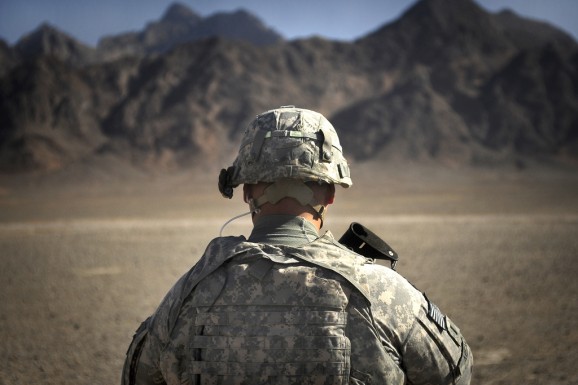
By Alexandra ArkinAs NATO ponders its Afghanistan legacy and future, so, too, do many of the Afghans who have made Chicago their new home.
And their much divided concerns do not differ greatly from those raised by NATO’s members, who will be considering their organization’s commitment to Afghanistan at their Chicago summit.
Some say life may be worse in Afghanistan after 10 years of NATO and U.S. presence. They say the government that replaced the Taliban is corrupt and not likely to garner the glue to keep the country together.
Some blame the Pashtuns — Afghanistan’s largest ethnic group, who also make up the majority of the government — for letting the government’s problems accumulate. Others, however, blame foreign governments for their role in helping to bring the Karzai government to power after the Taliban fell.
There are complaints that the Karzai government allocates more resources and money to certain regions of Afghanistan, while others remain impoverished. There is a conviction that lingering poverty and the lack of work has led desperate Afghanis to join the Taliban or other groups offering money and support.
At the same time, some say that NATO and the US have wrought changes that have improved Afghanis’ lives in many ways. They say Afghanis have learned to live with a fragile peace with the Taliban no longer in power. They point to the rebuilding that has taken place.
What will happen after NATO withdraws its armed forces in 2014 and assumes a supporting role?
Some fear that fighting will erupt among ethnic groups vying for political power, or that foreign countries will fund a proxy war among the ethnicities.
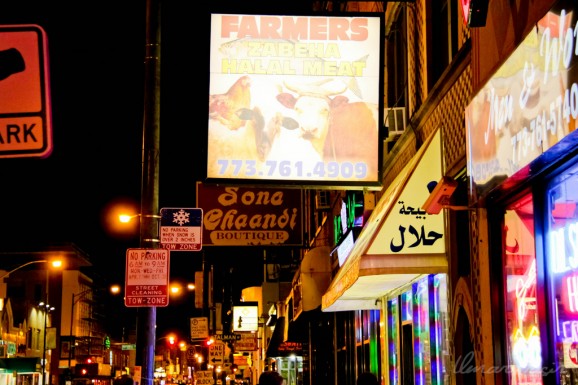
Chicago’s Afghan community
The Chicago metropolitan area has a small Afghan community, less than 1,000 persons with links to Afghanistan, according the U.S. Census Bureau. Of these only 300 live in the city with the remaining two-thirds scattered throughout the suburbs.
Omid Taqaddosi, an electronics technician who came to the US in 2001, is one of those who fears the future. He predicts that the post-NATO era will be worse than before the 2001 invasion, because the Taliban and government will unite.
“Since 2006, (the government) has been calling the Taliban to join them,” he said. Politicians “feel they will lose power. That’s why they invite the Taliban and radicals to join them in the government.”
But Nasir Raufi, owner of the Afghan Kabob restaurant who has lived in the US for 30 years, thinks a new government should include the Taliban, because they are Afghans too, and he doesn’t think the hard-line Islamic group will be able to do as much damage as they did before.
Reflecting a similar theme as the U.S. and some of its NATO allies, some of the Chicago area Afghanis believe it is not too late for their troubled nation to rebuild itself without violence.
Raufi, for example, has faith that Afghans will have successful elections and create a truly democratic government. “People now understand that war will not resolve anything,” he said.
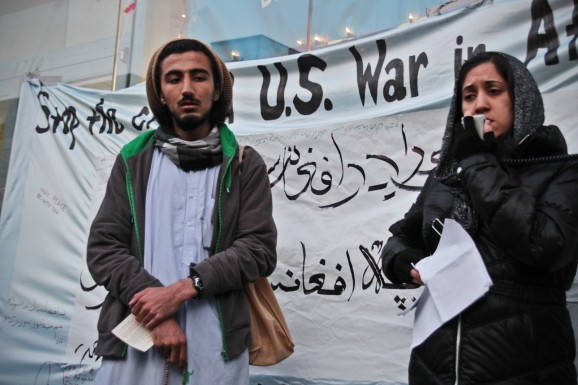
Afghans for Peace
Fatima “Afghan,” an activist in Oakland, California with Afghans for Peace, said Afghans can sort out their own problems if allowed to do so without foreign intervention. She asked that her full name not be used.
While saying that a civil war raging today in Afghanistan, she is nonetheless hopeful about Afghanistan’s youth.
“A lot of young people in Afghanistan are very passionate about doing something for their people,” she said. “Despite the odds, there’s a lot of resilience.”
Afghans agree that any U.S. and NATO forces that remain after 2014 to assist Afghan troops must do more than simply build bases.
NATO’s future role, if any, should be one of disarmament, said Fatima Afghan. NATO forces must de-escalate the situation to undo the damage wrought by decades of foreign presence.
Ghulam Alemi, a cab driver, said the U.S. must stop terrorist groups from growing and spreading, especially because such groups are the result of the U.S.’s own Cold War policies.
But Afghans agree an ongoing occupation by foreign forces will only result in one thing: no end to the war.